Identify & tag
Record the valve location, orientation, service and identification before removal.
Valve removal, identification, workshop overhaul, component inspection, pressure testing and controlled reinstatement-matched to the valve, service conditions and agreed requirements.
A valve overhaul must address the condition of the working components-not simply the external appearance.
Naude Industries can remove and identify valves onboard, complete the agreed workshop overhaul, assess sealing and operating components, pressure test the reassembled valve and return it for controlled reinstatement.
The final work method, repair actions, test pressure and witnessing requirements are confirmed for the individual valve and project.
Record the valve location, orientation, service and identification before removal.
Isolate, disconnect and transfer the valve to the workshop within the agreed access scope.
Dismantle the body, bonnet, spindle, disc or gate, gland and sealing components.
Remove deposits and assess corrosion, wear, damage and sealing-surface condition.
Complete agreed seat, disc, spindle, packing, fastener and component repairs.
Rebuild the valve with renewed consumable sealing materials where included.
Test to the agreed pressure and acceptance criteria before release from the workshop.
Return, reinstall, complete agreed operational checks and provide handover evidence.
Workshop records help connect the observed condition to the repair decision and the final scope completed.
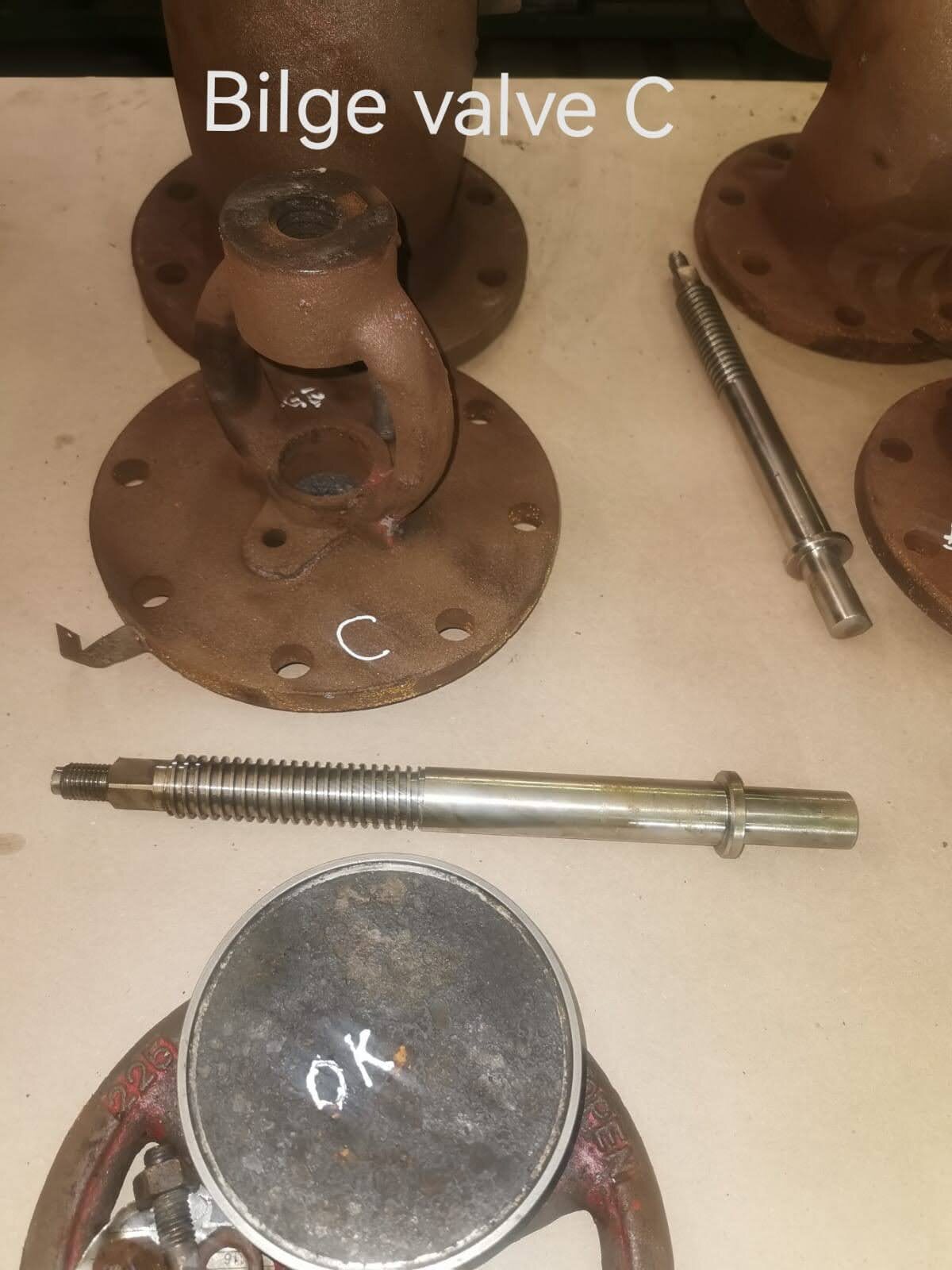


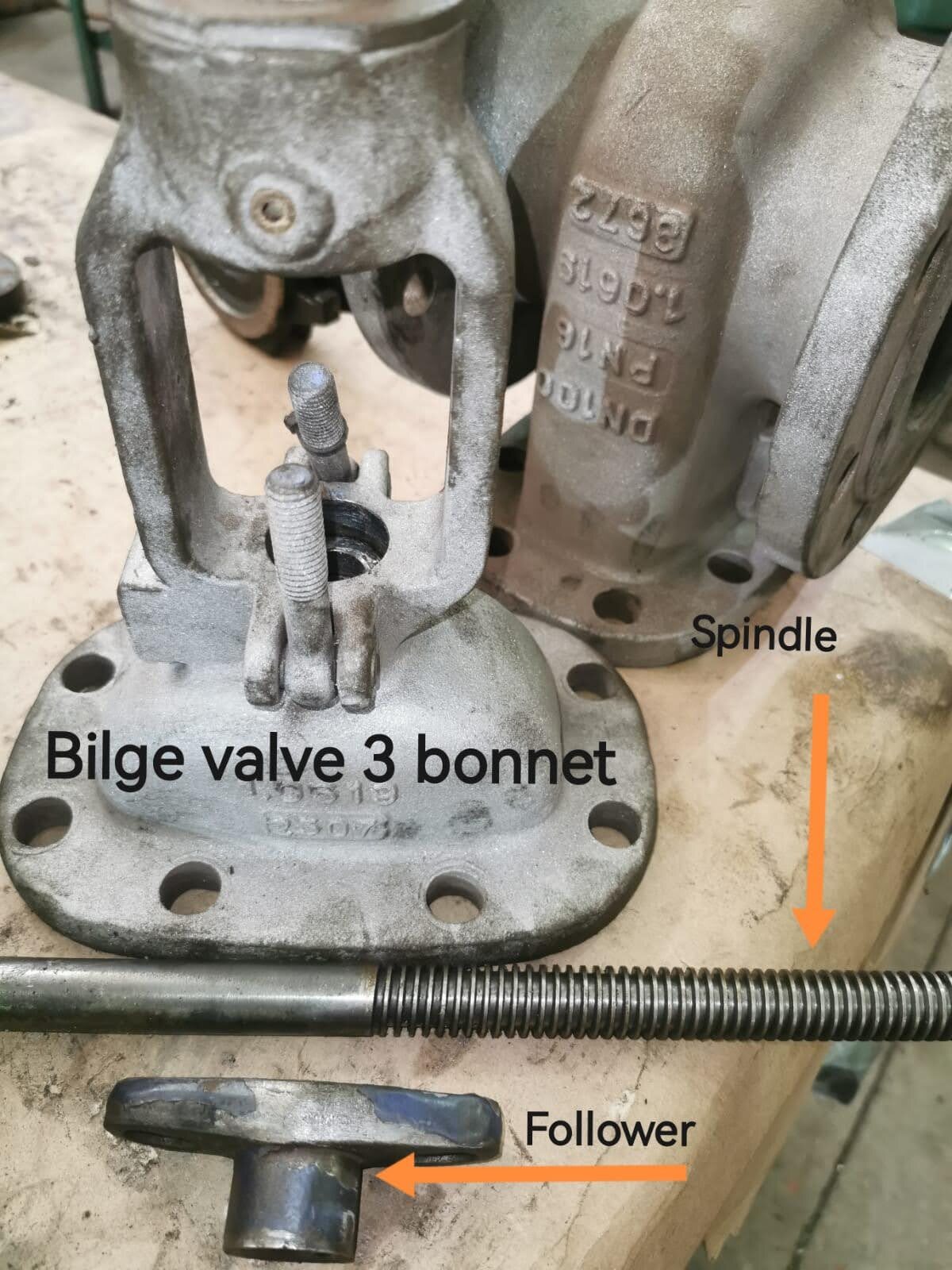
These project photographs show DN100 and DN125 bilge-valve components recorded during workshop assessment. Identifying each valve and inspecting the body, seat, gate or disc, spindle, bonnet and packing arrangement supports a more accurate repair decision and traceable handover.


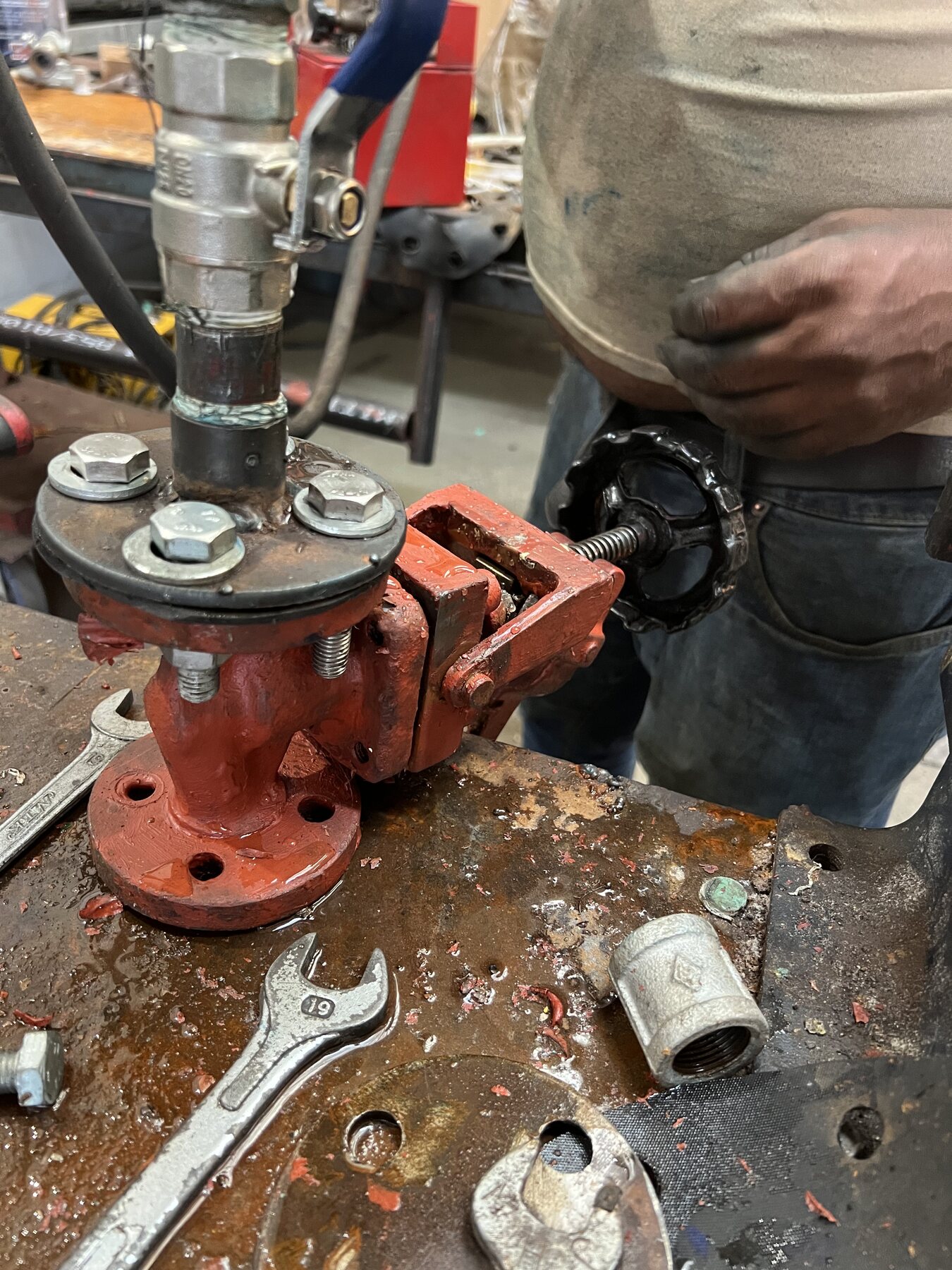
Pressure testing forms part of confirming the condition of the reassembled valve. The required pressure, medium, duration, acceptance criteria and witnessing arrangements are agreed before testing.
Test results and supporting photographs can be included in the project handover records where required.
Discuss a valve test scope →The agreed scope is matched to the valve type, size, service, condition, location and access constraints. Repairs that only become visible after stripping are recorded and addressed through the agreed project process.
Specialist rigging, removals in way, replacement valves or major components, Class attendance, third-party inspection and witnessing are confirmed separately when required.
Valves are normally tested between 3 and 5 bar, subject to the applicable classification-society requirements, valve duty and agreed scope. Testing can also be completed to the client’s specified pressure and acceptance criteria.
Yes, subject to isolation, access, permits and the agreed scope. Specialist rigging and significant removals in way are assessed and allowed for separately where required.
The assessment may include the body, bonnet, seat, disc or gate, spindle, gland, follower, packing arrangement, gaskets, fasteners and operating mechanism, depending on the valve design.
Yes. Required hold points, attending parties, test criteria and records should be confirmed before work begins. Class attendance and third-party fees are treated according to the agreed scope.
Provide the valve type, size, rating, service, quantity, vessel or project location, photographs, available drawings, access information, required dates, test requirements and whether removal and reinstatement are included.